
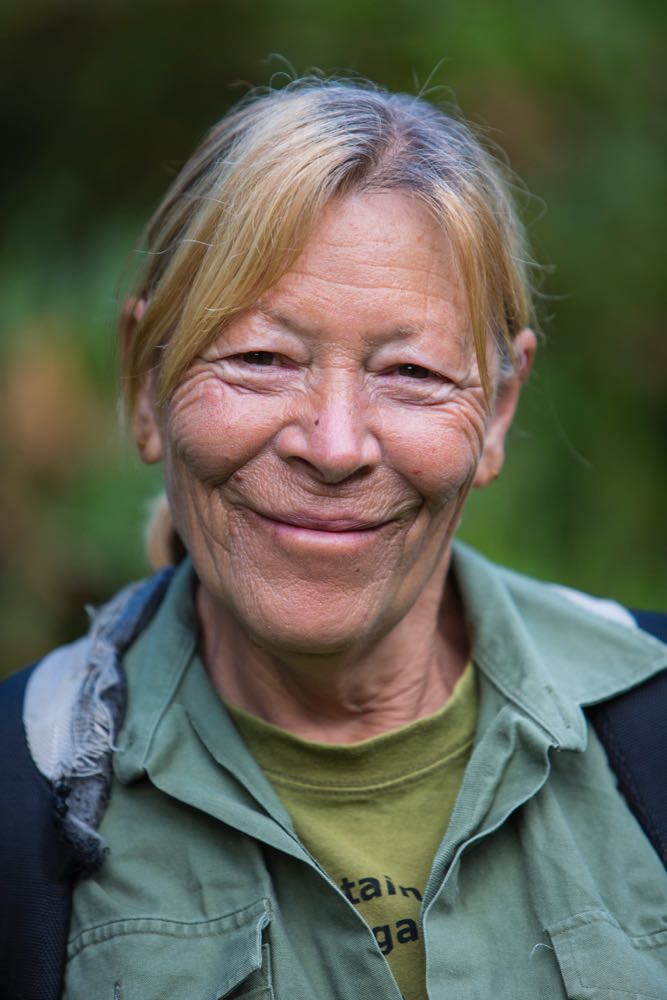

I met Sandra Gray last year in Kisoro. I have not stopped thinking about her since.
If you ever find yourself in southwestern Uganda, near the misty slopes of Mgahinga, ask around for the British lady who studies monkeys. Everyone knows her. And once you meet her, you will understand exactly why I call her a moving conservation library.
She is not what I expected. Sandra is a former British nurse turned primatologist, but there is nothing distant or academic about her. She is tough. Vibrant. She speaks with a directness that can catch you off guard. Yet within minutes of talking to her, I realized I was sitting with someone who carries more knowledge about this corner of Uganda than most textbooks ever will.
Sandra arrived in Uganda in 2004 to see mountain gorillas. Like many visitors, she fell in love with the landscape. But unlike most, she fell for a different creature entirely, the endangered golden monkeys of Mgahinga. So she stayed. She became the first zoologist to study them in detail. She named her troop Kachima, the local word for monkey. And every single day, she hikes into the forest to follow them.
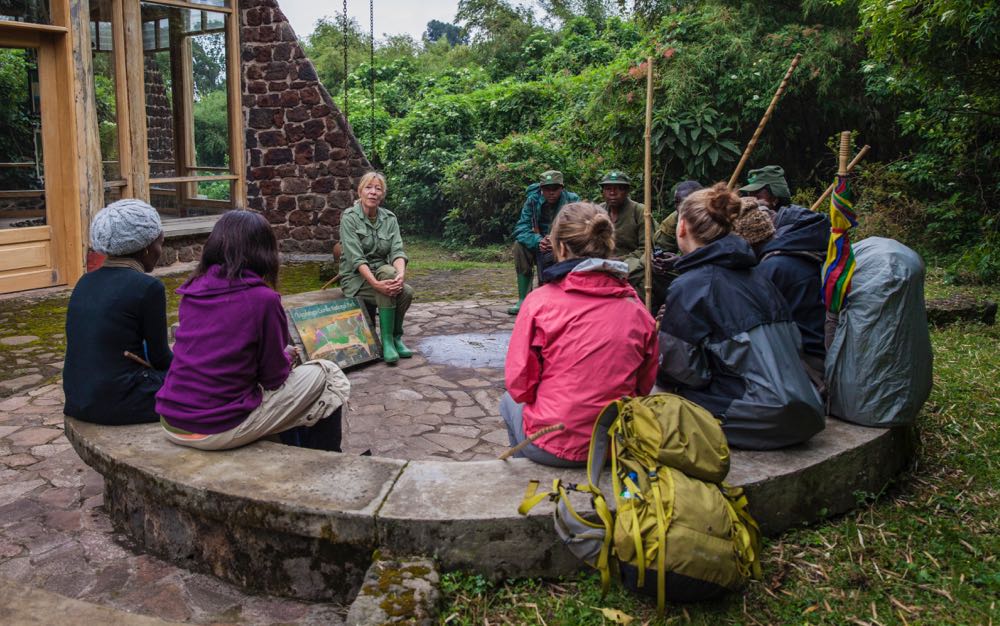
Introduction to Golden Monkey Tracking by Sandra Grey ( Courtesy Photo)
Her memory is staggering. She knows individual monkeys by face, their family disputes, their favourite feeding trees, their escape routes. She knows which forest paths flood after three hours of rain and which slopes poachers still attempt to use. Talking to her is like opening a living field guide. She does not recite facts. She tells stories. Stories of monkeys she has watched grow old. Stories of local children she has taught about animal welfare. Stories of abandoned dogs she has taken in when the forest work is done.
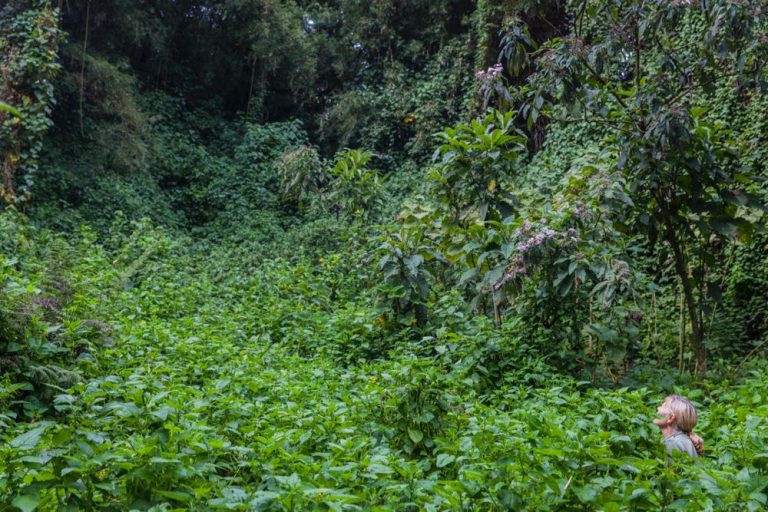
Lady Sandra in the Left Foreground, Spotted Deep in the Mgahiga Ranges (Courtesy Photo)
But here is what the internet will not tell you about Sandra Gray.
When I met her, she told me about running a rabies treatment drive from Kisoro. She started it on a boda boda, a simple motorcycle clinic that travelled the entire country, bringing vaccines to communities with no other access. That story appears nowhere in conservation journals or glossy wildlife magazines. But this is exactly the kind of work Sandra does. Quietly. Without fanfare. Because it simply needs doing.
She also told me she is currently conserving Lake Mutanda in Kisoro, that breathtaking expanse of water dotted with emerald islands, framed by the peaks of Muhabura, Gahinga, and Sabinyo. Again, no press releases. No fundraising galas. Just a woman in muddy boots, quietly protecting one more piece of the landscape she has adopted as her own. Lake Mutanda faces threats from overfishing, pollution, and encroachment, and Sandra has added its waters to her growing list of causes.
I asked her why she stays. Funding is hard, she admitted. Everyone wants to give money to gorillas, lions, elephants. Golden monkeys? Lake Mutanda? Rabies vaccines on a motorcycle? Those do not attract donors. She was not bitter when she said this. She was simply stating a fact, then turning back to work.
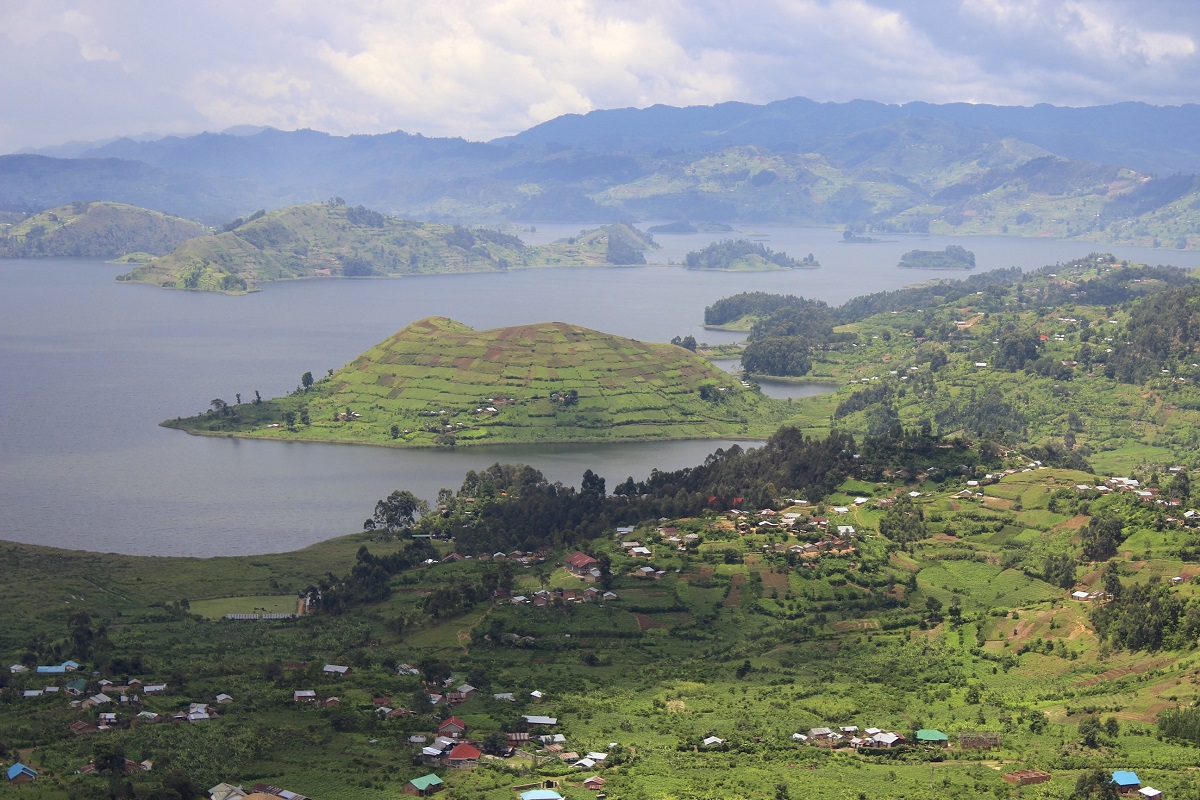
Lake Mutanda, also being conserved by Sandra Grey (Courtesy Photo)
I left Kisoro feeling I had met someone rare. Not a celebrity conservationist. Not a television personality. Just a woman who decided late in life to change everything, to dedicate herself completely to a place and its creatures. She is not building a legacy. She is living it. Day by day. Step by muddy step.
That is why I call her a moving conservation library. Because she carries everything inside her, the research, the history, the local names of places and monkeys and plants, the memory of every trail and every setback. And she is still moving. Still walking those slopes. Still watching over Lake Mutanda. Still talking to anyone who will listen.
If you ever go to Kisoro, find her. Sit with her. Let her talk. You will walk away knowing more about conservation, Uganda, monkeys, rabies, Lake Mutanda, and the human heart than any book could ever teach you.
The author_ is a socio-political commentator based in East Africa. He writes on governance, community development, and the human stories behind conservation across the region.
By Solomon Onyango
Socio-Political Commentator
M/W: +254713957982

Comments
2 commentsLeave a Comment
Solomon Onyango
1 month agoSandra probably knows every tree and species in the Virungu...sitting down with is the just what would recommend
Richard Nuwagira
1 month agoI am thrilled to discover Sandra and "everything she carries inside of her, the research......" I was wondering whether works on compilation of medicinal plants is by any chance part of it and if there are any such published themes in her ecosystem research