

BY SOLOMON ONYANGO.
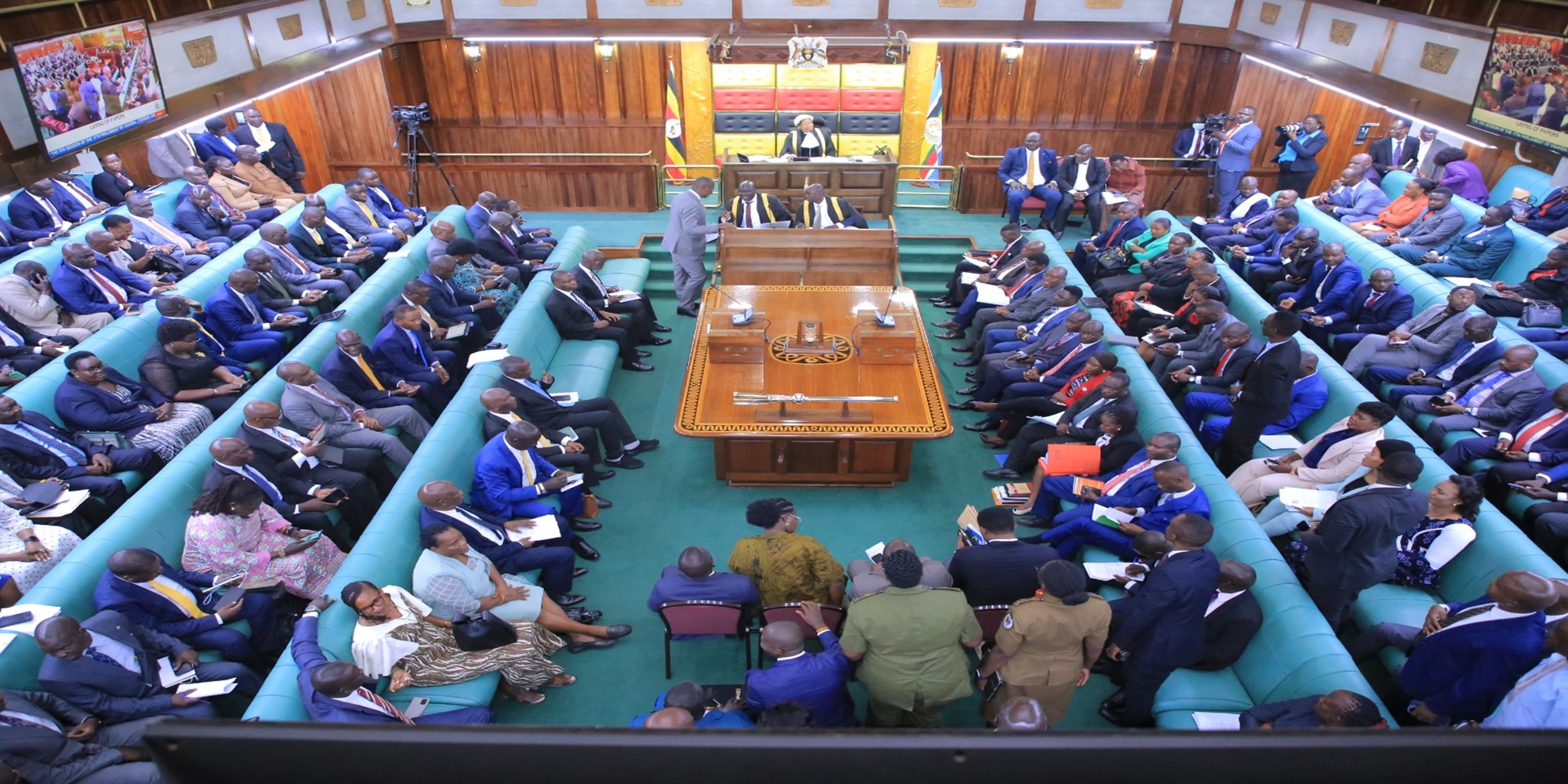
Parliament passed the Protection of Sovereignty Bill. It is now before President Museveni, who may sign it or return it for further consideration. The objective of preventing foreign interference is one few would dispute.
The joint committees worked carefully. They proposed limiting the Bill to agents of foreigners. Excluding Ugandans living abroad. Removing the Minister's power to declare someone a foreigner. Replacing approvals with a declaration system. Defining offences clearly. Reducing penalties. Setting measurable thresholds. Including a saving clause for business, research, journalism, advocacy and civic engagement. Providing for judicial review. The Attorney General and Bank of Uganda supported these changes.
But the committees themselves noted that the Bill's definitions remain broad and its impact could reach across the entire economy and society. The saving clause protects business, research, journalism, advocacy and civic engagement. It does not mention personal friendships. Not health donations. Not education. Not aid for people with disabilities or war victims. Not church offerings. Not cooperation with foreign political parties.
One question the committees did not ask concerns the late Agrey Awori. His friend Al Gore, the former United States vice president, provided him with financial support and a helicopter for his 2001 presidential campaign. That was a personal friendship, not foreign interference. Under this Bill, would such support be clearly lawful? The term "agent of a foreigner" remains undefined. The Minister would decide. No explicit exemption exists for a personal friend.
President Museveni has personal friends abroad who may wish to support his campaigns out of genuine regard for his leadership. Ugandan political parties, both in government and opposition, maintain relationships with sister parties overseas. Such international political solidarity is normal in democratic societies. The Bill requires prior approval for any funding "linked to political influence." The Minister determines what that phrase means. No exemption exists for routine party-to-party engagement or personal campaign support.
Consider Africa's recent history. Within a decade of independence, more than thirty coups took place across the continent. Liberation leaders became autocrats. One-party states and military juntas became common. The 1980s brought a debt crisis. Structural adjustment programmes weakened health and education systems. When the Cold War ended, external support dwindled. The 1990s saw national conferences that removed long-serving leaders in Benin, Mali and Niger. For a moment, there was hope.
That hope has faded. Since 2020, soldiers have removed elected governments in at least six countries – Mali, Chad, Guinea, Sudan, Burkina Faso and Niger. Other leaders have abolished term limits. Many citizens still express support for democracy but doubt that leaders will deliver it. Uganda's Bill arrives in this fragile environment, carrying the risk of criminalising the very external solidarity that once helped Africans free themselves.
Consider Tanzania's role in Uganda's own liberation. In 1978-79, Tanzanian forces under President Julius Nyerere entered Uganda, joined by thousands of Ugandan exiles. Milton Obote and Yoweri Museveni's FRONASA group had found refuge in Tanzania. Museveni was teaching in Moshi when he formed FRONASA around 1973. That war ended Idi Amin's rule. Under this Bill, would Tanzania's support for those exiles be considered "foreign interference"? The Bill's broad language could condemn exactly that kind of assistance. That is not a hypothetical. It is the story of Uganda's liberation.
A similar pattern appears in southern Africa. Cuba sent troops to Angola in 1975. By 1976, nearly 36,000 Cuban soldiers helped repel a South African invasion. Nelson Mandela acknowledged that without Cuba's intervention, majority rule in South Africa would not have been achieved. Castro's government trained the ANC, SWAPO and FRELIMO. Few would describe that support as illegitimate. Yet this Bill draws no distinction between an army fighting apartheid and a foreign donor supporting a political party today.
Nigeria also played a major role in ending apartheid. Nigerian officials have stated that the country spent well over $61 billion between 1960 and 1995 to fight apartheid, more than any other nation. Exact figures are debated, but Nigeria's contribution is widely recognised as crucial. Under Uganda's new law, similar support directed toward a Ugandan political cause could result in prison sentences. The Bill does not separate liberators from meddlers.
Kenya offers a useful comparison. Its Election Campaign Finance Act prohibits donations from foreign governments to political parties. However, the Political Parties Act permits foreign entities to provide "technical assistance", training, advice and digital tools, as long as no direct financial transfer occurs. Kenya monitors foreign involvement but does not impose a blanket ban. Uganda could learn from this approach.
Uganda itself has been a significant provider of the kind of cross-border support that the Bill now seeks to restrict. Ugandan troops have served in Somalia since 2007, with estimates ranging from 5,000 to 6,000 soldiers, making Uganda one of the largest contributors to the fight against Al-Shabaab. The UPDF deployed to South Sudan to protect the capital. Operation Shujaa in the Democratic Republic of Congo targets ADF rebels. President Museveni has mediated conflicts in Sudan and South Sudan. Uganda accepts foreign backing for all of these efforts. The same logic would treat similar backing for domestic political actors as a crime.
Beyond political and military matters, Uganda has relied on foreign generosity in health. During the Covid-19 pandemic, the Ministry of Health received over $109 million in donations from the World Health Organization, Denmark and other partners. Foreign well-wishers also contributed to Ebola response, polio vaccination campaigns and malaria control.
The Bill exempts personal remittances and routine banking but does not specifically exempt charitable health grants. The Global Fund recently committed $700 million to Uganda for 2024-2026, including $267 million for malaria alone. Would such grants require prior approval? The Bill does not say.
Education faces similar uncertainty. Universal Primary Education and Universal Secondary Education have depended on private donors from abroad for many years. The saving clause does not include education. Are those donors at risk? Parliament did not ask this question.
The most vulnerable Ugandans – people with disabilities, war victims and orphans – depend heavily on remittances. Uganda receives approximately $2.5 billion annually in remittances, according to the Economic Policy Research Centre. Much of this money supports disabled family members and households affected by war. A diaspora member sending $500 each month to care for a disabled parent should not need to file a declaration. The Bill does not make this clear.
Churches receive offerings and building contributions from the diaspora and international sympathisers. Religious leaders should not require legal advice to accept a gift for a new roof. The saving clause omitted religious donations entirely.
The committees recommended measurable thresholds based on scale or impact to guide enforcement. That recommendation is sound. But those thresholds are not included in the Bill. Leaving them to future regulations invites delay and inconsistency.
President Museveni has not yet assented. He has the opportunity to return the Bill to Parliament with a request for further amendments. A modest set of additions would address the gaps: explicit exemptions for personal friendships without hostile intent, charitable health and education funding, religious donations, support for vulnerable groups, and routine cooperation with foreign political parties. Basic thresholds should be written into the Act rather than left to ministerial discretion. Independent judicial review should be guaranteed for any ministerial determination of "political influence."
If this Bill had been law in 1979, would it have criminalised Tanzania's support for the overthrow of Idi Amin? Would it have blocked Cuban aid to the ANC? Would it prevent Ugandan peacekeepers from receiving international backing today? The Bill's broad language and ministerial discretion risk condemning the very forms of solidarity that built modern Africa – and that Uganda itself has practised.
Agrey Awori received a helicopter from Al Gore. President Museveni has such friends today. Uganda's children in UPE and USE, patients with malaria and polio, people with disabilities, war victims and churches all depend on foreign well-wishers. With a few targeted clarifications, the Protection of Sovereignty Bill can defend Uganda against genuine threats while welcoming the friends who have always stood with her.
The author is a commentator on socio-economic and political affairs anchored on governance and development in East Africa.
Comments
0 commentsLeave a Comment