

KISORO UGANDA: At least 170 learners across nine schools in Kisoro District risk dropping out of school if a German non-governmental organisation, Together for Uganda, is forced to scale down or halt its operations due to the proposed Sovereignty Protection Bill (2026).
The draft legislation introduces wide-ranging controls on foreign funding and political activity. It proposes criminal penalties for individuals or organisations that receive foreign support to promote policies not approved by Cabinet, mandatory registration of “agents of foreign entities,” fines of up to Shs4 billion for organisations, and prison sentences of up to 20 years for individuals.
The bill also grants authorities powers to seize assets linked to unlawful foreign funding and requires financial institutions to submit monthly reports on foreign transactions to the Ministry of Internal Affairs.
The Sovereignty Protection Bill (2026) continues to generate debate among development partners and civil society actors, with growing concern over its potential impact on foreign-funded community programmes in Uganda.
In a letter dated April 20, 2026, addressed to Bukimbiri County Member of Parliament Hon. Eddie Kwizera Wagahungo, the NGO expressed concern that the legislation—currently awaiting debate in Parliament—could severely restrict its long-running education sponsorship programme in Kisoro.
The organisation, which has operated in the region since 2004, currently supports 170 children in Mutolere and surrounding villages by providing school fees, learning materials, and basic welfare support from nursery level through secondary education and vocational training.
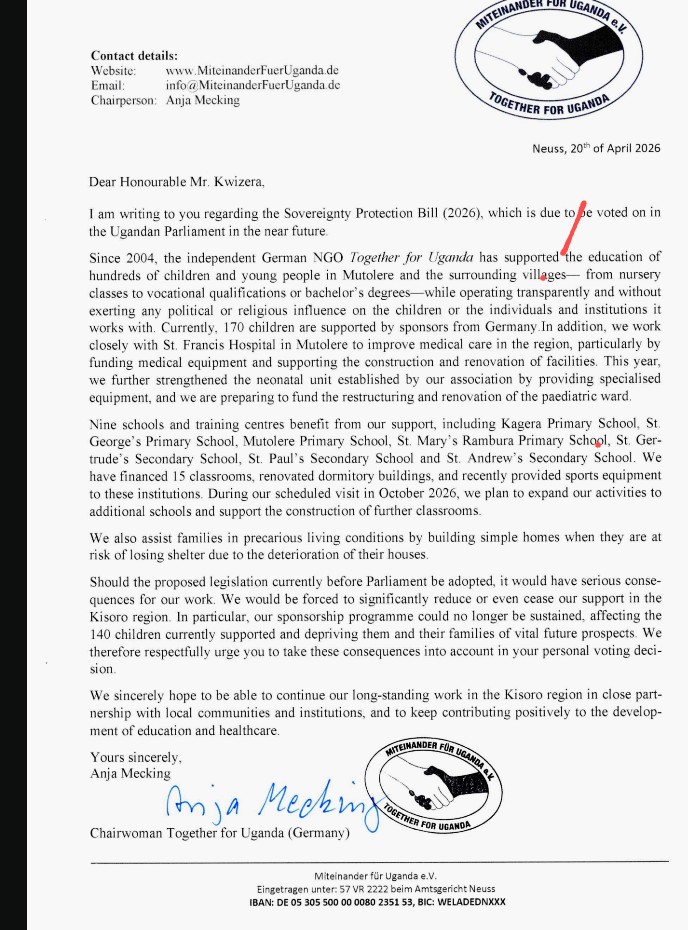
According to the NGO, the beneficiaries are spread across nine schools, including Kagera Primary School, St. George’s Primary School, Mutolere Primary School, St. Mary’s Rambura Primary School, St. Gertrude’s Secondary School, St. Paul’s Secondary School, and St. Andrew’s Secondary School, among others.
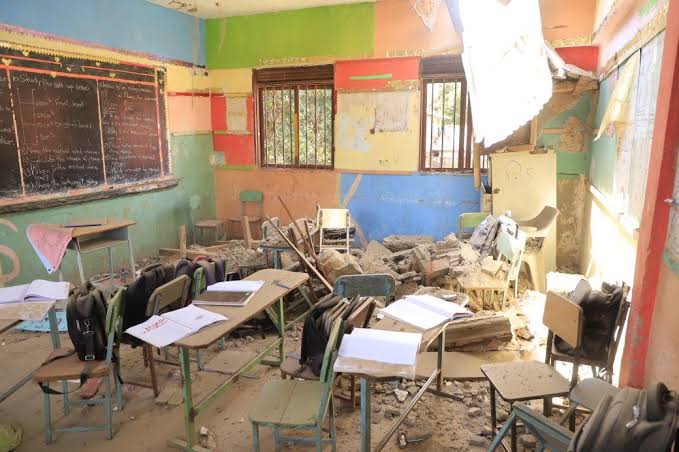
The letter warns that if the bill is passed in its current form, the sponsorship programme may no longer be sustainable, directly affecting approximately 140 children currently under active financial support. The broader group of 170 learners, it states, would face uncertain schooling prospects, with a high risk of dropping out due to the loss of tuition, scholastic materials, and school retention support.
“For many of these children, this programme is the only guarantee that they remain in school,” the organisation noted, warning that its withdrawal would have immediate consequences on school attendance and completion rates in the affected institutions.
The NGO also raised concerns about its wider work in healthcare and housing but emphasised that education sponsorship remains the most vulnerable area under threat.
Together for Uganda has urged lawmakers to consider the humanitarian implications of the proposed legislation, stressing that continued support is essential to prevent disruption to the education of vulnerable learners.
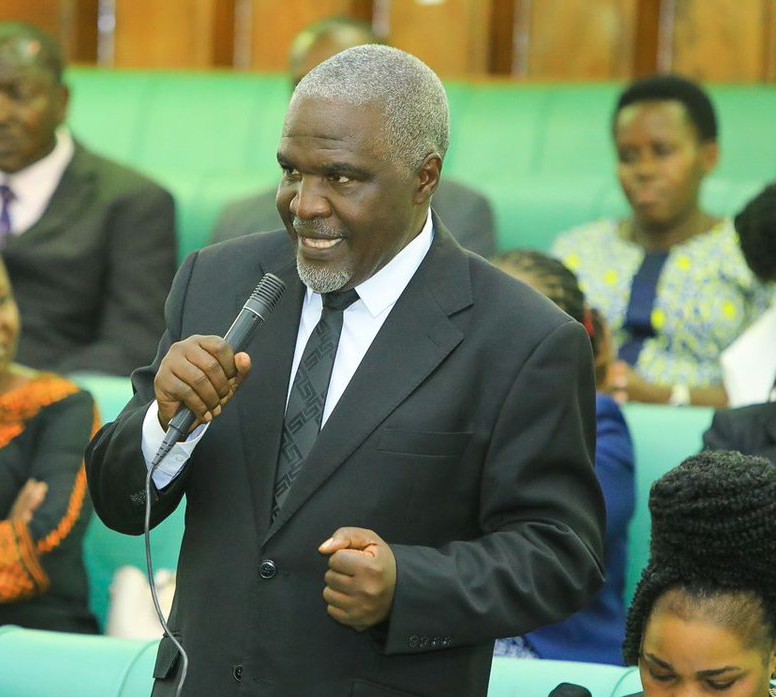
Meanwhile, Bukimbiri County legislator Eddie Kwizera, while addressing the media on Saturday, said the bill is not ready to be passed by Parliament, citing what he described as numerous irregularities.
Kwizera noted that although the government has the right to table any bill before Parliament, legislators also have the authority to reject it if it is poorly structured.
“The government has a right to bring a bill before Parliament, but Members of Parliament are the custodians of the process. Much of the content in this bill should be dropped. I have taken time to read the draft, and there are many irregularities. There is a mixture of electoral laws and foreign policy in one bill,” he said.
Kwizera also called on the public to remain patient, noting that procedural steps required before approving the bill could pose further challenges to its passage.
He further pointed out that outgoing Members of Parliament are preparing to leave office at the end of their five-year term, while newly elected MPs are set to be sworn in early May—a transition that could further delay or hinder the bill’s passage.
“The bill will not be passed; the public should be confident. Even if it is tabled, it will not pass in its current form. It may be set aside or dropped altogether. With just two weeks remaining, some MPs who were defeated are preparing to exit, while those elected are awaiting swearing-in. The bill needs time to be read and understood. Government already has many laws that can be used,” Kwizera added.


Comments
0 commentsLeave a Comment